

How to Use an Electric Honey Extractor: Fall Harvest Guide for Backyard Beekeepers
 Electric Honey Extractor, 2/4 Frames$242.25Shop now →Wax Melter for Candle Making, 10.6 Qts$117.25Shop now →Pneumatic Paste Liquid Filling Machine$197.60Shop now →
If you keep bees, you already know the moment: the supers are heavy, the frames are capped, and the question is no longer if you will harvest but how to use a honey extractor without losing a whole weekend to hand cranking. A small electric honey extractor turns a sticky, all-day job into an afternoon project, and it protects the drawn comb your bees spent months building. This guide walks backyard beekeepers through when to extract, how a 2/4 frame electric extractor works, and what else belongs on your honey-house table before, during and after the spin.
Why More Backyard Beekeepers Are Switching to an Electric Honey Extractor
Hobby beekeeping keeps growing across the U.S., and so does the cost of good local honey at farmers markets. A single strong hive can give you 30 to 60 pounds in a good year. Crush-and-strain works for one or two frames, but it destroys the comb, so your bees have to rebuild wax before they can store honey again. Extracting saves that comb and gets supers back on the hive faster.
Fall is also the last practical window. Once nights drop into the 50s, honey thickens and spins out slowly. Pulling surplus supers before the cold, while leaving the bees enough stores for winter, is why extractor searches jump every September and October.
How an Electric Honey Extractor Works
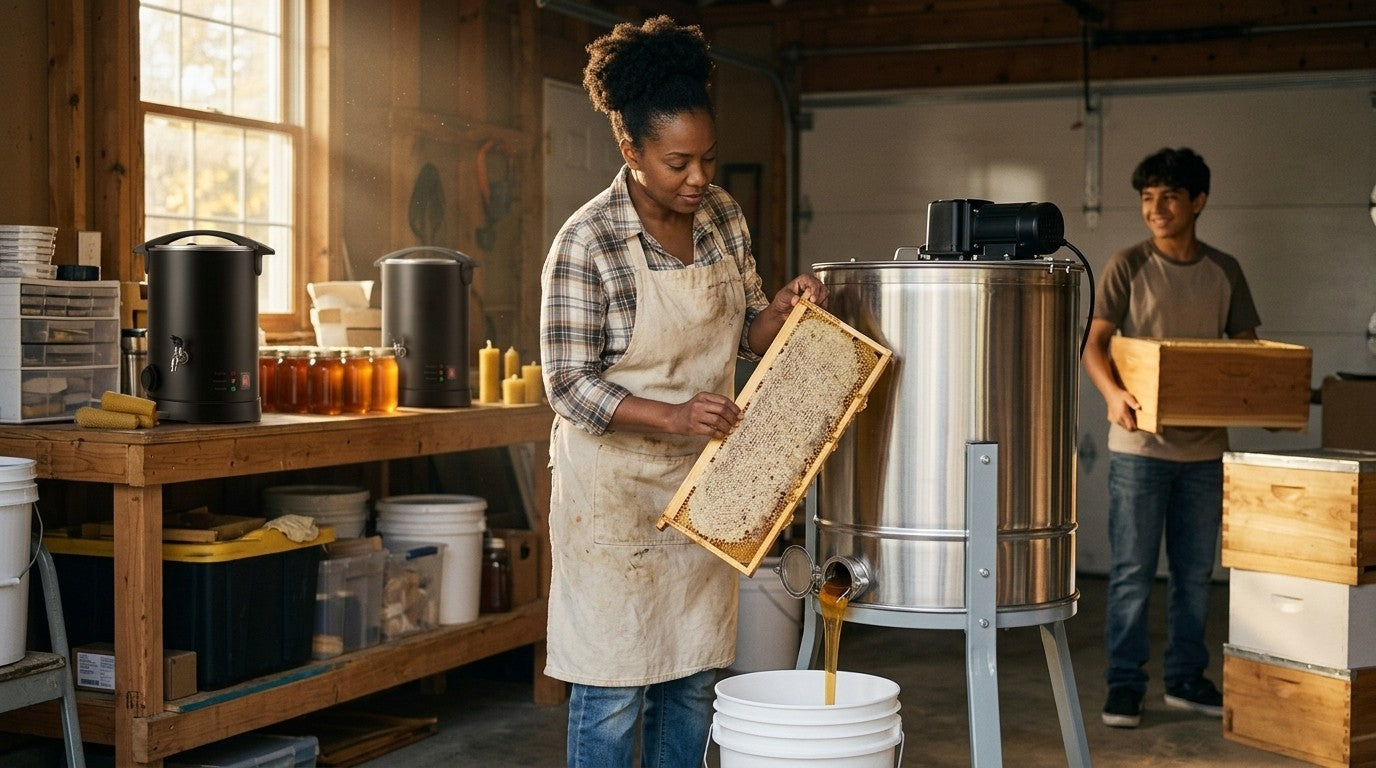
An extractor is a stainless steel drum with a basket inside. You slice the wax cappings off each frame, set the frames in the basket, and spin. Centrifugal force throws honey out of the cells onto the drum wall, it runs down a cone-shaped bottom, and you open the honey gate to fill a bucket.
The VEVOR Electric Honey Extractor, 2/4 Frames uses a 140W motor with adjustable speed up to 1300 rpm, so you can start slow and ramp up. It holds up to 2 deep frames (about 18.9 x 9 in) and 2 medium or shallow frames (about 18.9 x 6.3 in), plus a 1.8 in honey gate. The height-adjustable stand sets the top of the drum at roughly 39 to 42.5 inches, about waist height for most adults, so you are not bending over a bucket all afternoon.
Step-by-step: how to use a honey extractor
- Check moisture. Extract frames that are at least 80 to 90 percent capped. Uncapped nectar is too wet and can ferment.
- Warm the room. Honey flows best around 80 to 90°F. A warm kitchen or garage helps in fall.
- Uncap. Slice cappings into a tray and save them for wax.
- Balance the basket. Load frames of similar weight opposite each other to prevent wobble.
- Spin low, then high. Start slow so heavy comb does not blow out, flip the frames, then spin faster to empty both sides.
- Drain and strain. Open the honey gate into a bucket with a double strainer.
- Return wet frames. Give the bees the sticky frames to clean, then store them for spring.
Which Beekeeper Needs a 2/4 Frame Extractor?
You have 1 to 5 hives
A 2/4 frame extractor is the sweet spot. It fits in a basement or kitchen corner, cleans with a garden hose, and handles a few supers in a few hours.
You are tired of crush-and-strain
If you have been mashing comb in a bucket, the extractor pays you back in saved wax. Bees use about 6 to 8 pounds of honey to make 1 pound of wax, so keeping your drawn comb means more honey next season.
You want to sell or gift honey
Clean, fast extraction means clear honey that looks great in jars for the holidays, church sales and farm stands.
The Honey Harvest Bundle: Before, During and After
- Before: warm room, uncapping tray and the extractor set up on its stand.
- During: the VEVOR Electric Honey Extractor, 2/4 Frames doing the spinning for you.
- After, bottling: the VEVOR Pneumatic Paste Liquid Filling Machine, 5-50ml Bottle Filler fills sample jars and honey sticks evenly, which is great for gift sets.
- After, cappings wax: the VEVOR Wax Melter for Candle Making, 10.6 Qts turns rinsed cappings into clean beeswax for candles, lip balm and holiday gifts.
- After, mead: lower-grade or crystallized honey becomes mead in the VEVOR Pressure Fermenter 15 PSI, 8 Gal/30L.
Pro Tips for a Clean Fall Extraction
- Extract the same day you pull supers so small hive beetles do not move in.
- Work with doors closed. Bees find an open honey room fast.
- Bolt the stand legs to a sheet of plywood to stop walking at high speed.
- Rinse with warm water, not hot. Hot water melts wax smears onto the drum.
Planning your gear for winter? Our Winter-Ready Garage checklist helps you store supers and equipment, and the Thanksgiving Hosting Guide has ideas for putting your honey on the table.
Frequently Asked Questions
Is an electric honey extractor worth it for one hive?
If you plan to keep bees for more than a season, yes. Saving drawn comb alone gives your bees a big head start, and a 2/4 frame model is small enough for one or two hives.
How long does it take to extract a super?
About 5 to 10 minutes of spinning per load once frames are uncapped. A medium super of 10 frames usually takes under an hour start to finish.
Can you extract honey in cold weather?
Yes, but warm the frames and room first. Cold honey is thick and leaves much more in the comb.
What speed should a honey extractor run?
Start low to protect new comb, then increase. Many beekeepers finish at higher speed only after flipping the frames once.
Get Ready for Your Fall Harvest
Your bees did the hard part. Let the extractor handle the rest, then turn cappings into candles and honey into gifts. Orders ship in about 10 days, so order now to have everything set up before your last supers come off.